
Wellness habits for office workers are no longer optional when most Americans spend long hours sitting, typing, scrolling, and rushing between meetings. I know how easy it is to stay glued to a chair, skip water, eat lunch at the desk, and call it productivity. But over time, that routine can lead to back stiffness, eye strain, low energy, poor focus, and mental burnout.
The good news is that a healthier workday does not require a gym membership or a complete schedule change. It starts with small micro-habits that fit naturally into a 9-to-5 office routine.
Why Office Workers Struggle With Daily Wellness
Most office jobs in the US are built around screens, deadlines, and long sitting hours. That combination can quietly affect the body and mind. The biggest issues usually include prolonged sedentary behavior, poor posture, digital eye strain, distracted eating, low hydration, and stress overload.
The CDC recommends short workplace activity breaks because even 5 to 10 minutes of movement can fit into the workday without special equipment. Mayo Clinic also highlights the importance of proper desk height, chair support, foot position, and screen placement for better office ergonomics.
Build Dynamic Movement Into the Workday
Sitting for hours is one of the biggest health traps in office life. I like to use movement triggers instead of relying on motivation. A subtle phone alarm, smartwatch vibration, or calendar reminder can prompt me to stand every hour.
A quick walk to refill water, a lap around the office, or a short staircase break can reset the body. Active transit also helps. Parking farther away, taking stairs instead of elevators, or walking during phone calls adds natural movement without disrupting the day.
Walking meetings are another smart option. Not every discussion needs a conference room. For smaller internal conversations, a short walk can support creativity, reduce stiffness, and make the meeting feel less draining.
Use Desk Stretches to Reduce Stiffness

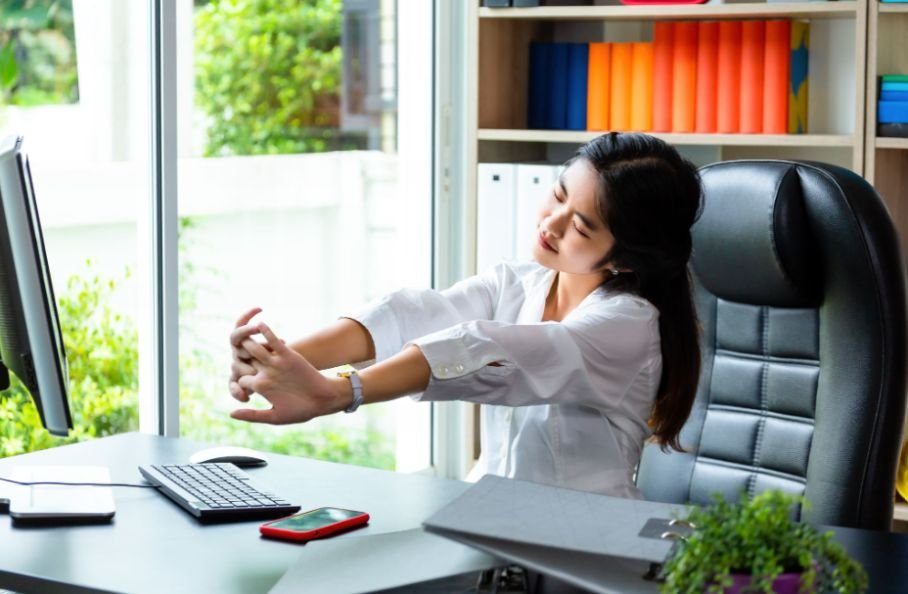
Simple desk stretches can make a major difference. I do not need a yoga mat or a private room. Gentle chair yoga, shoulder shrugs, neck rolls, wrist circles, seated spinal twists, and calf raises can all work at a cubicle or home office desk.
The goal is not to exercise intensely during work. The goal is to break the frozen posture that builds up from sitting too long. These small movements help the neck, shoulders, hips, wrists, and lower back feel less tense by the end of the day.
Protect Your Eyes From Digital Strain
Screen care is one of the most important wellness habits for office workers because most desk jobs depend on laptops, monitors, phones, and tablets. Digital eye strain can cause dry eyes, headaches, blurry vision, and reduced focus.
The 20-20-20 rule is simple. Every 20 minutes, I look at something about 20 feet away for at least 20 seconds. I also lower screen brightness, reduce glare, keep the monitor at eye level, and turn on warmer display settings when needed.
Phone triggers can help too. Whenever I answer a phone call, I stand up or walk around the room. This protects my eyes, improves movement, and breaks the habit of sitting through every task.
Create an Ergonomic Desk Setup That Supports Posture
Good posture starts with the setup. I keep my feet flat on the floor, my lower back supported, my shoulders relaxed, and my screen directly at eye level. If a laptop sits too low, I raise it with a stand or stable surface and use a separate keyboard when possible.
The chair should support the lower back, and the desk should leave enough space for knees, thighs, and feet. Poor ergonomics can turn a normal workday into neck pain, wrist strain, and lower back discomfort.
Eat Smarter During Office Hours
Mindful nutrition is a major part of workplace wellness. Many office workers eat whatever is fastest, especially during busy days. That often means vending machine snacks, breakroom sweets, or last-minute fast food.
I prefer keeping simple desk drawer snacks nearby, such as whole nuts, seeds, and plain whole-grain crackers. These options help reduce the temptation to grab candy or pastries when energy drops.
Meal prepping also helps. Preparing balanced lunches on Sunday can prevent rushed weekday choices. A good office lunch should include protein, vegetables, fiber-rich carbs, and healthy fats.
Take Unplugged Lunch Breaks
Eating lunch at the desk may look productive, but it keeps the brain in work mode. It can also lead to distracted overeating because attention stays on emails, spreadsheets, or messages.
When possible, I step away from my workspace to eat. Even 15 minutes away from the screen can improve the day. This gives the body time to digest and gives the mind a real break before the afternoon workload begins.
Drink Water Before You Feel Tired
Hydration is simple, but many office workers ignore it. I keep a large refillable water bottle directly on my desk as a visual reminder. Water tracking does not need to be complicated. The goal is to sip regularly instead of waiting until thirst or fatigue hits.
Too much coffee, soda, or sugary drinks can create energy spikes and crashes. Water should be the main drink during the workday, with caffeine used more intentionally.
Reset Stress With Box Breathing
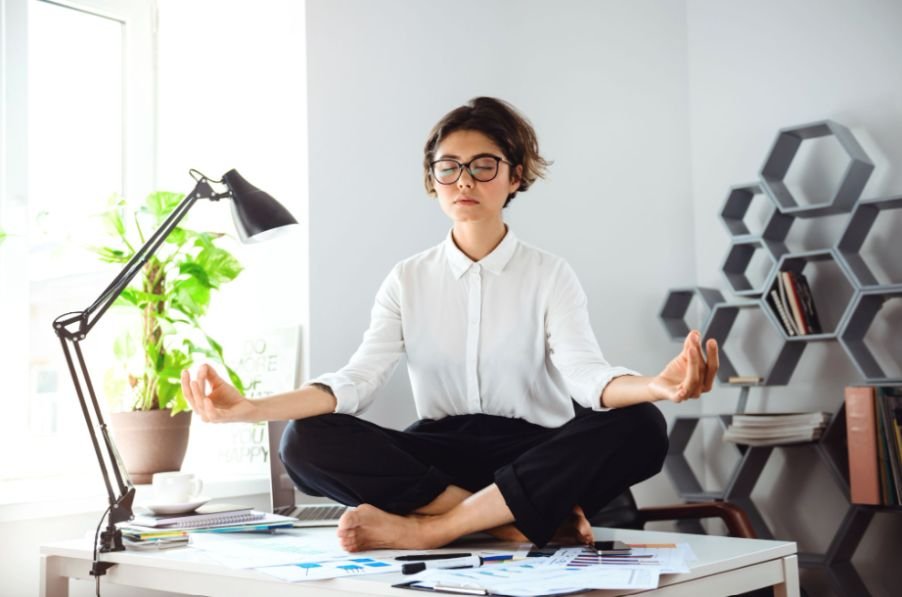
Office stress often builds in small moments: a difficult email, a packed meeting schedule, or a tight deadline. Box breathing is one of the easiest reset tools I use.
Managing workplace stress also becomes easier when you practice how to build a better mindset every day, helping you respond calmly instead of reacting to pressure.
I inhale for 4 seconds, hold for 4 seconds, exhale for 4 seconds, and hold again for 4 seconds. This short breathing pattern can calm the body and make the next task feel more manageable.
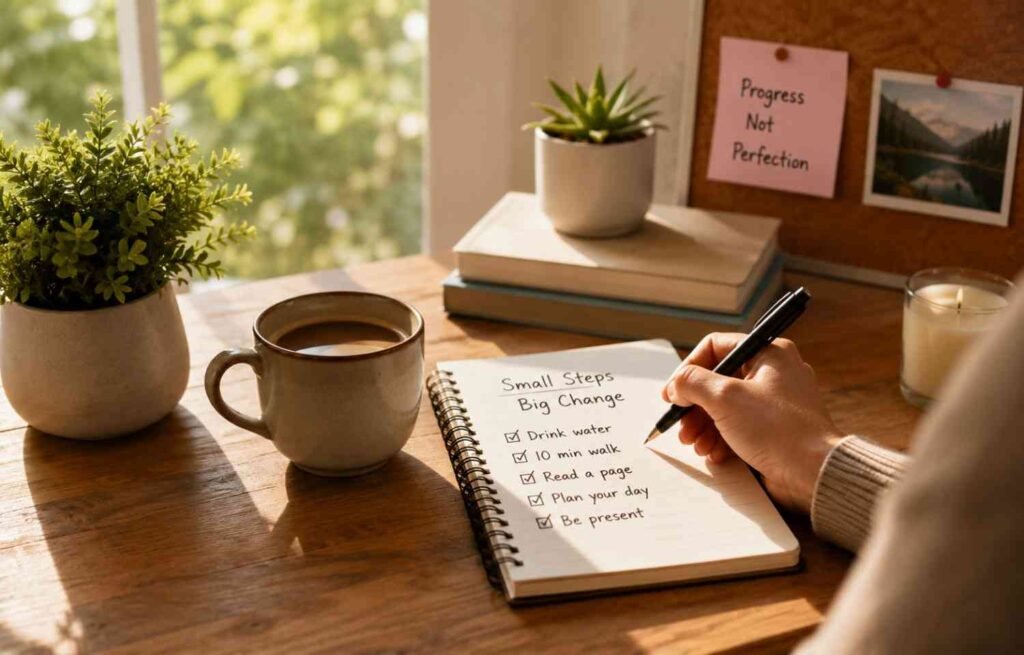
Handwritten notes also help when the mind feels overloaded. Writing priorities on paper gives me a short digital break and makes the task list feel clearer.
Improve Mood With a Healthier Desk Environment
A clean, comfortable desk can support better focus. I like using small changes that make the space feel less stressful. A low-maintenance plant, such as a succulent or snake plant, can add calmness without creating extra work.
Natural daylight, reduced clutter, comfortable seating, and organized supplies can also improve workplace comfort. A healthier desk environment makes it easier to stay consistent with better habits.
End the Workday With Clear Boundaries
Healthy office life does not end at 5 p.m. A simple shutdown routine helps separate work from personal time. I review completed tasks, write tomorrow’s top priorities, close work tabs, and step away from the desk.
This is especially important for remote workers. Without boundaries, the workday can stretch into dinner, family time, and sleep. Clear stopping points protect energy and reduce burnout.
Frequently Asked Questions
1. What are the best health habits for office workers?
The best habits include moving every hour, stretching at the desk, drinking water, eating balanced meals, using the 20-20-20 rule, improving posture, and taking real lunch breaks.
2. How can I stay active in a desk job?
You can stay active by walking during calls, taking stairs, standing every hour, doing desk stretches, using movement reminders, and turning short meetings into walking meetings.
3. How do office workers reduce eye strain?
Office workers can reduce eye strain by following the 20-20-20 rule, lowering screen brightness, reducing glare, blinking often, and keeping the monitor at eye level.
4. What are easy wellness tips for a 9-to-5 job?
Easy tips include keeping water on the desk, packing healthy snacks, eating away from the computer, using box breathing, adding desk plants, and creating a clear end-of-day routine.
Final Thoughts
Wellness habits for office workers work best when they are small, realistic, and repeatable. I do not need to overhaul my life to feel better at work. I only need to move more often, protect my eyes, sit better, drink water, eat with intention, manage stress, and step away when the workday ends.
Small office wellness habits may look simple, but they can change how the whole day feels.